Benchmarks Results

ProTerra embraces mutual recognition and synergies wherever applicable. These synergies aim at reducing costs and complexity on all levels and encourage cooperation.

The multi-crop and global aspect of the ProTerra standard supported by the benchmark process helps to reduce the number of systems needed to be operated by supply chain actors, simplify procurement policies and practices, and embrace mutual recognition and synergies wherever applicable. These synergies aim to reduce costs, audit burden and complexity on all levels of the supply chain and to encourage cooperation.

ProTerra Standard V5 and GMP+ 2025 Benchmarking Results

ProTerra Standard V5 and GMP+ 2025 Benchmarking Results

ProTerra Standard version 5.0 (PTV5) requirements for Level II economic operators (Transport and Storage, Traders and Dealers), have been benchmarked against the 2024 updates of GMP+ requirements. The results have demonstrated adherence between the two standards in several aspects, which allows the ProTerra Foundation to recognise a Level II organisation certified under GMP+ provided that the additional PTV5 requirements are met.

Read More
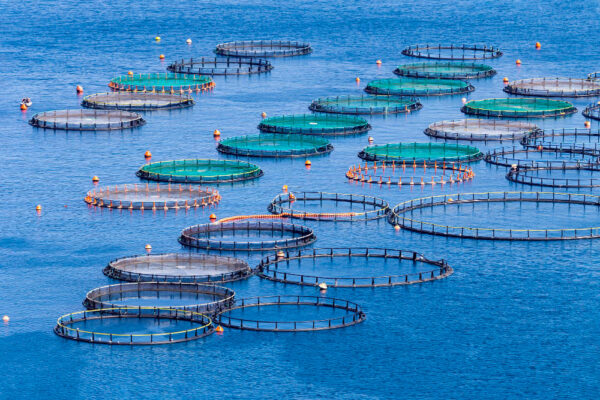
ProTerra MRV Standard Recognised on ASC Feed Accepted Certification Schemes List 2

ProTerra MRV V1 and ProTerra V5 positively benchmarked against ASC Feed

The ProTerra MRV (Monitoring and Verification) Standard V1.0 has successfully completed a benchmark by the Aquaculture Stewardship Council (ASC) and is now recognised on the ASC Feed Accepted Certification Schemes List under the ASC Feed Standard for sustainable soy.

The ProTerra Standard V5.0 is also recognised on the ASC Feed Accepted Certification Schemes List, providing continued assurance of compliance with sustainable soy sourcing requirements.

For more information, please refer to the ASC Feed Accepted Certification Schemes List.

Read More
MRV Standard Recognised by Global Seafood Alliance

MRV Standard Recognised by Global Seafood Alliance

ProTerra’s MRV Standard V1 has been officially recognised by the Global Seafood Alliance (GSA) as a sustainability standard within its framework. This recognition highlights the strength and reliability of the MRV Standard for soy and soy-derived ingredients and complements the existing recognition of he ProTerra Standard V5.

This milestone reinforces ProTerra’s commitment to transparent, responsible and verifiable soy sourcing and supports best practices across supply chains.

Read More
ProTerra Standard QS-recognised for soybean production

ProTerra Standard: QS-recognised for soybean production

The German QS food quality and safety scheme has developed an additional module for deforestation-free soybeans in QS feed, which is mandatory for companies producing or handling feed in the QS scheme from January 2024.

The ProTerra Standard v4.1 has been successfully benchmarked and is recognised by QS as deforestation-free sustainability standard.

Click here to access Annex 4.2 QS-recognised standards for soybean production.

Read More

FEFAC

The European Feed Manufacturers’ Federation (FEFAC) developed the FEFAC 2023 Guidelines to provide transparency to operators interested in purchasing responsible soy. Based on a set of principles and a thorough analysis of existing schemes, concrete criteria and indicators for sustainable sourcing were developed. ProTerra Standard version 5.0 has been published on the FEFAC benchmarking tool, compliant with the FEFAC 2023 Guidelines.

Read More
FEFAC

The ProTerra MRV Standard V1.0 has been successfully benchmarked against the FEFAC criteria and is published on the FEFAC benchmarking instance as well as on Standards Map. This positive assessment reflects the alignment of the MRV Standard with the transparency and sustainability criteria for responsible soy sourcing set out by the European Feed Manufacturers’ Federation (FEFAC).

Read More

ITC Sustainability Maps

The International Trade Centre (ITC) launched the Sustainability Map as a new online gateway to connect businesses and producers and help pave the way towards more sustainable trade.
For the most accurate and detailed information, you can visit the ProTerra Foundation’s page on the Standards Map, this page provides comprehensive details on the standard’s requirements, governance, and resources.

Read More
SAI Platform’s Farm Sustainability Assessment

SAI Platform’s Farm Sustainability Assessment

The ProTerra Standard Version 5.0 has been positively benchmarked against the new version of the Farm Sustainability Assessment, FSA 3.0 and achieved Silver Level Equivalence, which means 100% essential, 94% intermediate and 68% advanced. These results will further strengthen the relationship between the ProTerra Foundation and the SAI Platform, increasing the benefits for actors in the food and feed supply chains.

Read More

ISCC certification

The ProTerra Sustainability Standard V5 was benchmarked against ISCC, revealing a high degree of alignment between the two. This alignment allows ISCC-certified organisations to gain ProTerra V5 recognition with reduced audit times and simplified assessments.

Read More
Benchmarking ProTerra Standard V5 and Europa Soya Guidelines (Feb 2025)

ProTerra Standard V5 and Europe Soya Guidelines (Feb 2025)

The ProTerra Standard Version 5 (PTV5), across all certification levels from farm production to industrial processing, has been benchmarked against the Europe Soya Guidelines (February 2025), demonstrating a strong alignment with an overall adherence of 91%. This high level of compatibility highlights the consistency between both frameworks in promoting sustainable, transparent, and traceable supply chains.

Read More
Recognition of ProTerra Standard V5 as an Equivalent System of Donau Soja1

Recognition of ProTerra Standard V5 as an alternative system of Donau Soja

ProTerra Standard V5 has been recognised by Donau Soja as an alternative sustainability system for non-GMO soybeans following a detailed benchmarking of system requirements.
Under this recognition, ProTerra-certified soybeans may be accepted as soybeans from an approved system within the scope of Donau Soja and Europe Soya Guidelines, subject to conditions on EU origin, traceability, non-GMO assurance and compliance with EU regulatory limits.
This development enhances technical compatibility between recognised systems and supports greater transparency and consistency in European non-GMO soy supply chains.

Read More
ProTerra Approved Certification Bodies

Sustainable Cereal and Oilseed (DTP 112 V6)

ProTerra has developed a benchmark of the ProTerra Standard V5 (PT V5) from September 2023 against Sustainable Cereal and Oilseed (DTP 112) V6 from 18 November 2021 (the latest available version). This benchmarking also includes the ProTerra Standard European Interpretation (V2) or ProTerra Europa.

Read More
ProTerra and VLOG Recognition Agreement Strengthens Non-GMO Certification Alignment (1)

ProTerra and VLOG Recognition Agreement Strengthens Non-GMO Certification Alignment

ProTerra and the German Association Food without Genetic Engineering (Verband  Lebensmittel ohne Gentechnik e.V. VLOG) have agreed to recognise ProTerra Standard V5.0 certification as equivalent to the current VLOG Standard under defined conditions. This recognition applies to plant-based foods at Stage III “Industrial Processing” (food manufacturers). And it is feasible for all companies that manufacture outside the European Union.

Read More

VLOG certification

When buying food that carries the “Ohne GenTechnik” seal consumers are assured that they contain:

  • No genetically modified organisms (GMOs) or parts thereof;
  • No vitamins, aromas, enzymes and other food additives manufactured with the help of GMOs;
  • No GMO material in animal feed, with strict time limits being observed if animals have at some point been reared on feed containing GMOs.

Through this mutual recognition, we want to offer VLOG certified producers the possibility to go a step further in their sustainability journey, going beyond non-GMO certification by including other relevant social and environmental issues covered by the ProTerra Standard.

ProTerra Recognition of SGS NON – GMO Standard

ProTerra Recognition of SGS NON – GMO Standard

ProTerra Foundation has conducted a benchmarking exercise on ProTerra V5 PRINCIPLE 5: No use of Genetically Modified Organisms (GMOs) against the SGS NON – GMO IP Supply Chain Standard Revision: V 5.0. Results have shown full adherence. ProTerra Foundation will therefore accept certification under the SGS NON – GMO Standard as evidence of compliance with ProTerra indicator 5.1.1, which requires that genetically modified organisms and their by-products are not used in the production of ProTerra-certified products.

Read More
ProTerra-Standard-V5-and-Japan-Good-Agricultural-Practices (1)

ProTerra Standard V5 and Japan Good Agricultural Practices Benchmark

The ProTerra Standard V5 has been benchmarked against the Japan Good Agricultural Practices (JGAP) framework, including the Sustainable Agriculture (+SA) add-on module. Organisations certified under JGAP can obtain ProTerra recognition by meeting a limited number of additional requirements.
The benchmarking resulted in an overall alignment rate of 73%, reflecting a substantial level of equivalence between the two frameworks. This alignment reduces duplication and strengthens assurance consistency, providing Japanese producers with a credible pathway into sustainability-driven international value chains.

Read More
Benchmarking results ProTerra V5 and Ama Pastus Version 2016 – changes 2020 – 22

Benchmarking results: ProTerra V5 and Ama Pastus Version 2016 – changes 2020 – 2

The ProTerra Foundation benchmarked the ProTerra Standard V5 against the Ama Pastus Guidelines (Version 2016, changes 2020–2) to identify the additional requirements that Ama Pastus-certified organisations would need to meet in order to achieve ProTerra certification. While Ama Pastus focuses on feed safety, quality, and HACCP-based processes, ProTerra V5 includes additional criteria related to environmental sustainability, social responsibility, and non-GMO assurance. The two frameworks can therefore be considered complementary; their alignment may support reduced audit duplication, potential cost efficiencies, and improved access to certain markets.

Read More
Benchmarking ProTerra Standard (V5.0) and Bonsucro

Bonsucro

In a recent benchmarking exercise, the ProTerra Foundation assessed the alignment between its ProTerra Standard V5.0 and the Bonsucro Production Standard V5.2. The results showed a 37% alignment between the Bonsucro and ProTerra Principles. ProTerra remains committed to fostering mutual recognition of sustainability standards, aiming to streamline implementation and reduce certification costs.

Read More

VIVE Programme

The VIVE Programme is a sustainability initiative focused on continuous improvement across food ingredient supply chains. It encompasses all operations and activities, from producers to end users, that impact sustainability.
ProTerra has conducted a benchmark comparison between the ProTerra Standard V5 and the VIVE Sustainable Supply Programme version 4.0. Learn how your company can benefit from it!

Read More
Smartcane BMP

Smartcane BMP

A benchmarking exercise of the ProTerra Standard v4.1 and the Smartcane BMP v2 took place. The main aim of the assessment was to receive an independent opinion on the differences and similarities of the standards with respect to its requirements and applicability in order to see where synergies can be realized and put into practice.

Accountability Framework Initiative (AFi)

Accountability Framework Initiative (AFi)

Companies working to improve supply chain sustainability need clarity on how different tools and standards relate to one another. To help meet this need, the ProTerra Foundation has collaborated with the Accountability Framework initiative (AFi) to benchmark the ProTerra Standard (version 4.1) against the Accountability Framework. This analysis confirmed broad alignment between the two initiatives as well as opportunities for companies to use the ProTerra standard and Accountability Framework in complementary ways to meet their goals.
Please visit ‘Certification and roundtables’ on the AFi website for more information.